Powered By


This has kind of been my whole life. While I am very much neurodivergent, I was "raised" neurotypical, if that makes sense. I did go for an assessment in preschool when I displayed ADHD behaviors, but the psychologist dropped the ball and I was never formally assessed at that time. I went through mainstream school, and did well. There were definitely areas I struggled in more than others, but I did it. I graduated from college in 2006 with a Bachelor's in social work.
My parents were always of the school of thought that nothing was "wrong" with me and brushed off any suspicions I had that something was up. Finally, at 25, I took matters into my own hands and went for an ADHD assessment. Just as I had suspected, I had hit the nail on the head! About a year later, I began to suspect that I was autistic as well. I went for an assessment in 2014 and again, I was on to something!
My parents then began to see the light and only understood me better once I received my diagnoses and became an advocate. They were able to learn that autism and ADHD look different for everyone!
Today, I work in human services with others who have developmental disabilities and mental health diagnoses. I love people, and I live to help them! 😊
Do you mean high functioning as well ?
Neurodiversity and Neurodivergence: Difference Explained
Autism Today
https://www.autismtoday.com
California has an autism society
https://www.autismla.org/1/
also autism speaks has resources
LOCAL connections
several autism support and parent groups operate in and around Woodland Hills, California, including the Center for Autism and Related Disorders, local therapy-led parent circles, and private school neurodiversity networks.Local Support Groups and CentersCenter for Autism and Related Disorders (CARD): Located at 5959 Topanga Canyon Blvd, Suite 125, Woodland Hills, CA 91367; offers personalized parent guidance, training, and social groups. Contact them at (818) 960-0633.Parenting Group for Autism/ADHD: Local peer and professional-led support groups hosted in the 91367 zip code area focus on strategies and community for parents raising neurodivergent children.Woodland Hills Private School Neurodiversity Affinity Group: Provides a dedicated community space and network for local parents and guardians of neurodivergent kids.
Brain Function and ProcessingNeurodivergent: Processes the world, emotions, and sensory details differently, often leading to unique strengths like deep focus or creativity alongside distinct challenges.Neurotypical: Follows standard cognitive and developmental patterns that align with society's baseline expectations for communication and behavior.
Social and Communication StylesNeurodivergent: May prefer direct, literal language, use self-soothing movements (stimming), or need extra time to recover after socializing.Neurotypical: Generally picks up unspoken social rules, small talk, and fast conversational back-and-forth automatically.
Sensory and Executive ResponseNeurodivergent: Frequently experiences hypersensitivity or hyposensitivity to light, sound, or touch, and may struggle with executive functioning tasks like planning and organization.Neurotypical: Tends to tolerate everyday sensory input and manage task transitions with less disruption.
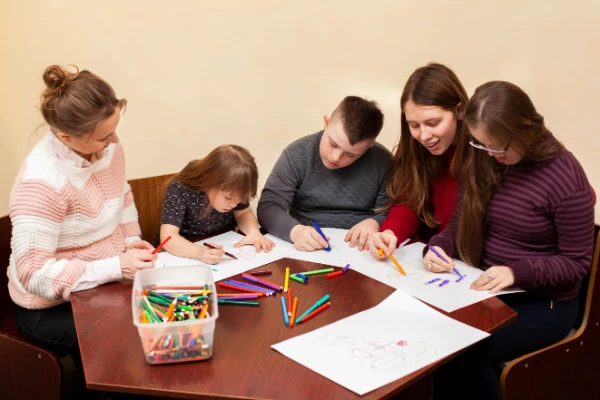


It sounds like navigating that "in-between" space with a young adult can feel isolating — like they don't quite fit neatly into either world. That's actually a really common experience for parents of young adults on the spectrum, and you're definitely not alone in feeling this way.
Connecting with others who truly "get it" Show Full Answer


 Continue with Facebook
Continue with Email
Continue with Facebook
Continue with Email

 Join
Join






 Your Privacy Choices